
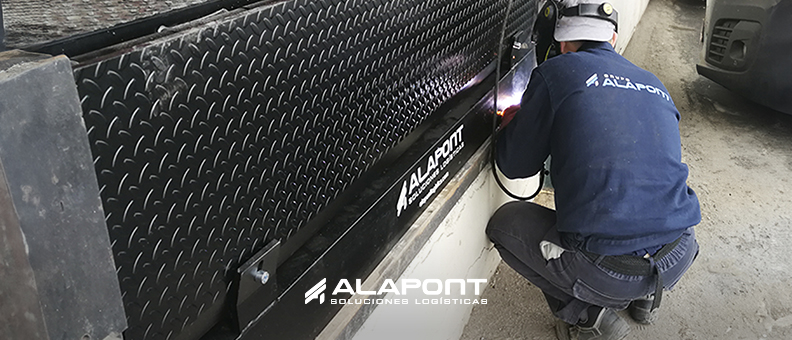
Maintaining a loading dock leveler involves more than simply checking that the equipment is working. An inspection should identify wear, damage, leaks, deformation or any other condition that could affect the equipment’s performance or safety.
Working conditions must also be properly controlled during maintenance, particularly when work is carried out in loading and unloading areas or when external personnel are involved.
A proper inspection should therefore combine checks on the condition of the loading dock leveler with appropriate safety measures during the work.
What should be checked during a loading dock leveler inspection?
Inspections should be adapted to the type of loading dock leveler and its technical characteristics. Depending on the equipment, the following components may need to be checked:
- Structure: possible deformation, damage or deterioration.
- Hinges and moving parts: cleanliness, wear and lubrication where applicable.
- Pins and shafts: condition and proper securing.
- Hydraulic system: oil level, hydraulic hoses and possible leaks where applicable.
- Control panel: condition of connections, sensors and electrical components.
- Anchoring: securing of the loading dock leveler to the concrete floor.
- Dock bumpers: condition and possible damage.
- Safety devices: proper operation and condition of the installed safety components.
The inspection should always be adapted to the specific model and the manufacturer’s technical instructions.
When should an additional inspection be carried out?
In addition to the checks included in the maintenance programme, certain situations require a specific inspection.
The condition of the loading dock leveler should be checked particularly:
- After a major repair.
- Following an impact.
- When unusual noises or movements occur.
- When leaks or visible damage are detected.
- When a safety device is not operating correctly.
- When any condition is identified that could affect the equipment’s operation.
The scope of the inspection will depend on the type of incident and the work carried out. A major repair, for example, may require a specific inspection before the loading dock leveler is returned to service.
To find out how to establish inspection intervals and organise a maintenance programme, see our guide to loading dock maintenance intervals and planning.
Loading dock leveler inspection procedure
Inspection and maintenance work should be carried out following a safe working procedure adapted to the equipment.
As a general reference, an intervention may include the following steps:
- Check that there are no people or objects in the work area.
- Secure the loading dock leveler using the appropriate safety devices.
- Position the equipment as required to carry out the work.
- Disconnect the power supply when required by the work procedure.
- Remove any debris from the loading dock leveler and the work area.
- Check the condition and cleanliness of the hinges.
- Inspect moving parts and lubricate them where applicable.
- Check the structure, shafts and pins.
- Inspect the hydraulic system and check for possible leaks.
- Check the control panel, sensors and connections.
- Check the condition of the anchoring points.
- Check the dock bumpers and other protective components.
The specific procedure must be adapted to the loading dock leveler model and the manufacturer’s instructions. Not all checks apply to every type of equipment.
Inspection of a vertical loading dock leveler
A vertical loading dock leveler requires specific checks related to its hydraulic system, moving parts, control panel and structure.
Depending on the equipment, checks may include the oil level, condition of hydraulic hoses, hinges, electrical components, structure and safety systems.
Alapont Global also provides specific technical documentation and a maintenance checklist for vertical loading dock levelers, which can be used as a reference when organising inspections.
Safety measures during maintenance work
Inspection should not focus solely on the loading dock leveler. The work area must also be properly controlled throughout the intervention.
When maintenance work is carried out in logistics facilities where workers, vehicles and material-handling equipment operate in the same area, measures should be implemented to reduce the risk of interaction between them.
Preventive measures may include:
- Delimiting and clearly marking the work area.
- Keeping workers away from moving equipment whenever possible.
- Preventing unauthorised access.
- Informing external personnel about the applicable safety requirements.
- Keeping vehicles immobilised during loading and unloading operations where required.
- Using the appropriate personal protective equipment.
- Keeping people outside the operating range of the equipment.
The organisation of the work area must be adapted to the actual conditions of each facility and to the applicable requirements for the safe use of work equipment, as established by Directive 2009/104/EC.
What should you do if an abnormality is detected?
Any abnormality detected during an inspection should be assessed before the loading dock leveler is used again if it could affect its operation or safety.
Depending on the problem, it may be necessary to:
- Report the incident.
- Isolate the equipment from use.
- Identify the affected component.
- Determine whether a repair is required.
- Carry out the necessary intervention.
- Check the equipment before returning it to service.
An incident should not be considered resolved simply because the loading dock leveler appears to be operating normally again.
Who should carry out inspection and maintenance?
Inspections should be carried out by personnel with the appropriate training and competence for the type of intervention involved.
Visual checks can help identify certain abnormalities, but work involving hydraulic or electrical systems, structural components or safety devices requires appropriate technical expertise.
All work should also be carried out in accordance with the manufacturer’s instructions and the applicable safety requirements.
Training and safety in logistics facilities
Maintenance safety also depends on ensuring that the people working at the facility understand the relevant procedures and the risks associated with loading dock areas.
For this reason, in addition to maintenance services, staff training can help improve the way maintenance activities are carried out and reduce potentially unsafe situations.
What should you remember about loading dock leveler inspections?
An effective inspection involves more than simply checking that the loading dock leveler moves up and down correctly.
It should identify potential problems affecting the structure, moving parts, hydraulic systems, electrical components, anchoring points and safety devices, while also ensuring that working conditions are appropriate.
Inspections should be adapted to the type of loading dock leveler, the manufacturer’s instructions and the circumstances of each intervention.
If you need to assess the condition of a loading dock leveler or require technical maintenance, contact Alapont Global to discuss the needs of your facility.
