
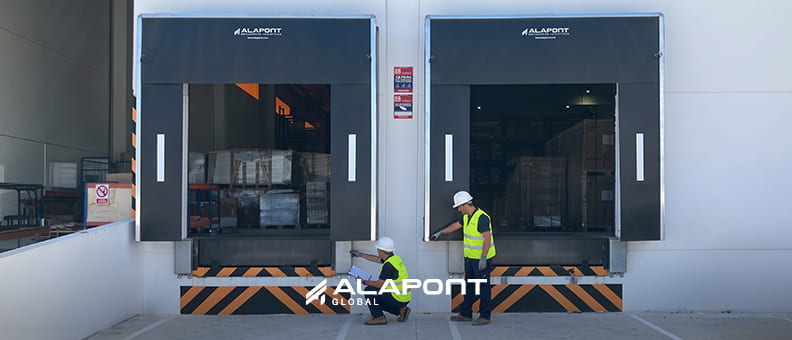
Regular loading dock maintenance is essential to keep equipment operating correctly and prevent minor defects from developing into problems that disrupt day-to-day operations.
The frequency of inspections should reflect the type of equipment installed, how heavily it is used, its operating environment and the manufacturer’s recommendations.
Any impact, breakdown or unusual behaviour should also trigger a specific inspection before the equipment is returned to normal service.
Why is loading dock maintenance important?
Maintenance should not begin only when something fails.
In a logistics facility, an equipment fault can stop a loading bay from operating and affect the continuity of warehouse and distribution activities. Regular inspections make it easier to identify wear or abnormal conditions before they develop into more serious failures.
Planned maintenance can help to:
- Reduce unexpected breakdowns.
- Identify wear and abnormal conditions.
- Keep equipment in suitable working condition.
- Plan maintenance interventions.
- Improve cost control.
- Extend equipment service life.
- Maintain appropriate safety conditions.
The aim is to move away from a purely reactive approach and towards planned management of equipment condition.
What problems can good maintenance help prevent?
Maintenance issues do not always appear as sudden equipment failures.
Deterioration may first show itself through small changes in performance which, if left unchecked, can eventually affect the operation of the equipment.
Warning signs can include:
- Unusual noises.
- Irregular movement.
- Hydraulic leaks.
- Deformation.
- Visible wear.
- Recurring faults.
- Problems with safety systems.
- Impact damage.
Identifying these signs early makes it possible to assess the condition of the equipment and determine whether technical intervention is required.
What should be checked during maintenance?
The inspection must be tailored to the type of equipment installed and the manufacturer’s instructions.
At a minimum, maintenance must address the general condition and functionality of the components involved in the operation. To learn how to perform a loading dock ramp inspection, it is advisable to specifically review the structural, mechanical, and safety elements.(Editado)Recuperar original
What components should be inspected?
- Structure: signs of deformation, damage or deterioration.
- Mechanical components: wear, condition and correct operation.
- Hydraulic systems: operation and any signs of leakage, where applicable.
- Safety systems: correct operation of installed safety devices.
- Auxiliary components: condition of any items that could affect equipment operation.
- General condition: unusual noises, abnormal movement or any behaviour that differs from normal operation.
Maintenance is not simply about checking whether the equipment still works. An inspection should also identify conditions that could affect its future operation.
How often should loading dock equipment be maintained?
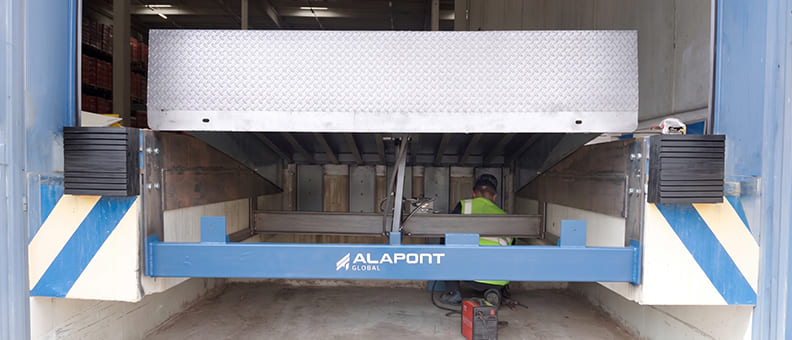
There is no single maintenance interval that applies to every loading dock.
The appropriate frequency should take into account:
- Type of equipment.
- Frequency and intensity of use.
- Operating conditions.
- Working environment.
- Manufacturer’s recommendations.
- History of breakdowns and incidents.
As a practical reference for maintenance planning, inspection intervals can be established according to usage levels:
| Usage level | Indicative inspection frequency |
|---|---|
| Heavy use or demanding operating conditions | Every 3 months |
| Moderate use | Every 6 months |
| Low use | At least once a year |
These frequencies are planning guidelines only and should not be interpreted as a universal legal requirement.
The manufacturer’s documentation and the actual operating conditions should take priority when establishing the maintenance programme.
When should a loading dock be inspected outside the normal schedule?
Scheduled maintenance is not sufficient when an incident occurs.
A specific inspection should be considered when:
- The equipment has been struck or impacted.
- A fault occurs.
- An unusual noise or movement is detected.
- A leak appears.
- Repairs have been carried out.
- The equipment has been out of service for an extended period.
- Any condition is identified that could affect its operation.
In these situations, do not wait until the next scheduled maintenance visit.
Which regulations apply to loading dock maintenance?
The applicable requirements depend on the country in which the equipment is installed, the type of equipment and its operating conditions.
In addition to following the manufacturer’s instructions, it is therefore important to identify the legal and technical requirements applicable in the relevant market.
In Europe, for example, EN 1398 sets out safety requirements for dock levellers and includes provisions relating to inspection and maintenance.
In North America, ANSI MH30.1 covers requirements relating to dock levelling devices used at loading bays.
The precise regulatory framework must always be checked for each market. A legal requirement applicable in one country should not automatically be assumed to apply in another.
What should a maintenance plan include?
A maintenance plan should make it clear which equipment is installed, when it needs to be inspected and what work has already been carried out.
To organise it effectively:
- Identify all equipment forming part of the loading dock installation.
- Define inspection intervals according to usage, working conditions and manufacturer recommendations.
- Establish the required checks for each item of equipment.
- Record inspections and incidents.
- Track breakdowns to identify recurring problems.
- Schedule the necessary interventions.
This ensures that maintenance does not depend solely on something going wrong.
How can you tell when loading dock equipment needs maintenance?
As well as scheduled inspections, changes in equipment behaviour can indicate the need for attention.
Look out for:
- Noises that were not present before.
- Sudden or irregular movement.
- Leaks.
- Deformation.
- Visible wear.
- Operating faults.
- Safety devices that do not respond correctly.
- Damage following an impact.
Any abnormal condition that could affect operation or safety should be assessed before the equipment continues to be used.
What is the difference between preventive and corrective maintenance?
The main difference is when the intervention takes place.
| Preventive maintenance | Corrective maintenance |
|---|---|
| Planned in advance | Carried out after a fault has been identified |
| Aims to detect wear or abnormal conditions | Aims to repair a breakdown |
| Allows maintenance work to be scheduled | May be required unexpectedly |
| Supports ongoing equipment monitoring | Responds to a specific incident |
Preventive maintenance cannot eliminate every breakdown, but it can help identify certain problems before they disrupt operations.
Who should carry out loading dock maintenance?
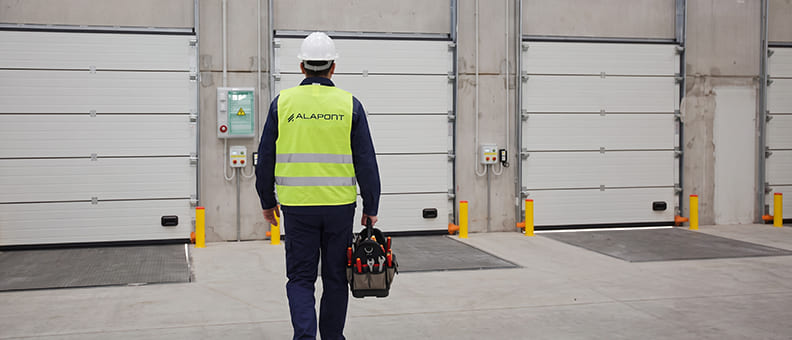
Not every check requires the same level of technical intervention.
It is useful to distinguish between:
- Routine checks: visual checks that can identify obvious signs of damage or abnormal conditions.
- Technical inspections: checks requiring personnel with the appropriate training and competence.
- Repairs and component replacement: technical interventions appropriate to the equipment concerned.
All work should be carried out in accordance with the manufacturer’s instructions and the applicable safety requirements.
What should you do after a breakdown or impact?
An incident should not be considered resolved simply because the equipment appears to work again.
The procedure should include:
- Identifying and reporting the abnormal condition.
- Taking the equipment out of service where necessary.
- Inspecting its condition.
- Carrying out the required repair.
- Verifying correct operation before returning it to service.
The appropriate action will depend on the type of damage and the equipment affected.
When should equipment be repaired or replaced?
Not every incident requires complete replacement.
The decision should consider the overall condition of the equipment, whether it can be repaired satisfactorily, component availability, safety and the history of previous faults.
Replacement should be considered particularly where there is:
- Significant structural damage.
- Wear that affects operation.
- Repeated failures.
- Problems that compromise safety.
- Components that can no longer be maintained adequately.
The decision should take account of operation, safety, cost and business continuity, rather than the price of a single repair alone.
How should loading dock maintenance be organised?
Effective maintenance requires inspections to form part of the normal management of the facility.
A practical five-step approach is:
- Create an equipment inventory: Identify all installed equipment and record the information required for its maintenance.
- Define inspection intervals: Set maintenance frequencies according to usage, operating conditions and the manufacturer’s recommendations.
- Record all interventions: Keep a history of inspections, breakdowns and repairs.
- Monitor incidents: Analyse recurring issues to identify where further action may be required.
- Update the maintenance plan: Adjust the programme when operating conditions change, new incidents occur or significant work is carried out.
Frequently asked questions about loading dock maintenance
Is loading dock maintenance mandatory?
Specific legal obligations depend on the country, the equipment and the applicable regulations. Equipment should be maintained in accordance with the relevant requirements and the manufacturer’s instructions.
How often should a loading dock be inspected?
There is no universal interval. Inspection frequency depends on the type of equipment, how it is used, its operating conditions and the manufacturer’s recommendations.
What should an inspection include?
The inspection should cover the general condition of the equipment, structural and mechanical components, hydraulic systems where applicable, safety systems and any signs of wear or abnormal behaviour.
Should equipment be checked after an impact?
Yes. An impact may cause damage that is not immediately visible. The condition of the equipment should be checked before it is returned to service.
What should be done if an abnormal condition is detected?
It should be reported and assessed before the equipment continues to be used if it could affect safe or reliable operation.
Who can carry out maintenance?
Checks and repairs should be carried out by personnel with the appropriate training and competence for the work concerned, in accordance with the manufacturer’s instructions.
What should you remember about loading dock maintenance?
Loading dock maintenance should form part of the normal operational planning of any facility that relies on its loading bays to maintain the flow of goods.
Inspection intervals should not be determined by the calendar alone. They should reflect the equipment, its level of use, operating conditions and the manufacturer’s recommendations. Any impact, abnormal condition or repair should also trigger an appropriate additional inspection.
If you need to assess the condition of your loading dock equipment or establish a maintenance programme tailored to your facility, contact Alapont Global to arrange a technical visit or request a tailored quotation.
