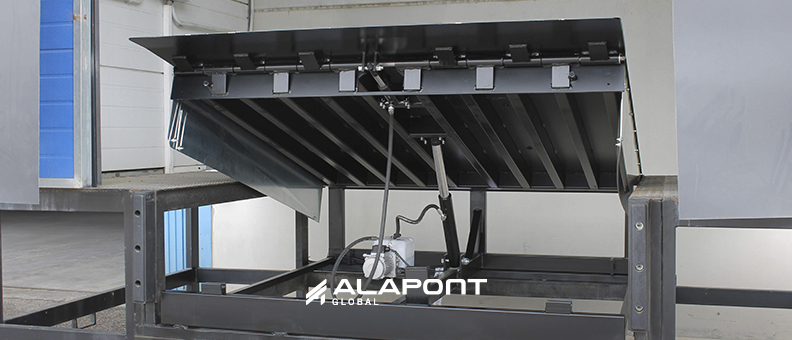
When designing your loading dock, getting the slope and length of your leveler right is crucial. These two factors will determine how efficiently and safely your dock operates, adapting perfectly to different vehicles and loads.
Maximum Slope for Dock Levelers
The maximum slope your dock leveler can handle depends on the type of vehicle you’ll be using. To guarantee smooth and safe operations, the UNE-EN 1398:2010 standard outlines specific recommendations based on the type of transport.
| Transportation method | Maximum slope of the leveler |
|---|---|
| Manually operated wheeled container | 3% |
| Manual pallet jack | 3% |
| Powered pallet jack | 7% |
| Electric forklift | 10% |
| Gasoline or propane forklift | 12,5% |
Loading dock leveler length
The length of a leveler ramp depends mainly on 3 factors:
- Height of the truck’s loading surface.
- Height of the loading dock.
- Permissible inclination angle for the transport means used.
Therefore, the longer the leveler ramp, the better the inclination angle will be.
The UNE-EN 1398 standard considers a minimum overlap length of the leveler ramp’s lip of 100 mm. Consequently, the length of the lip must be such that it guarantees this.
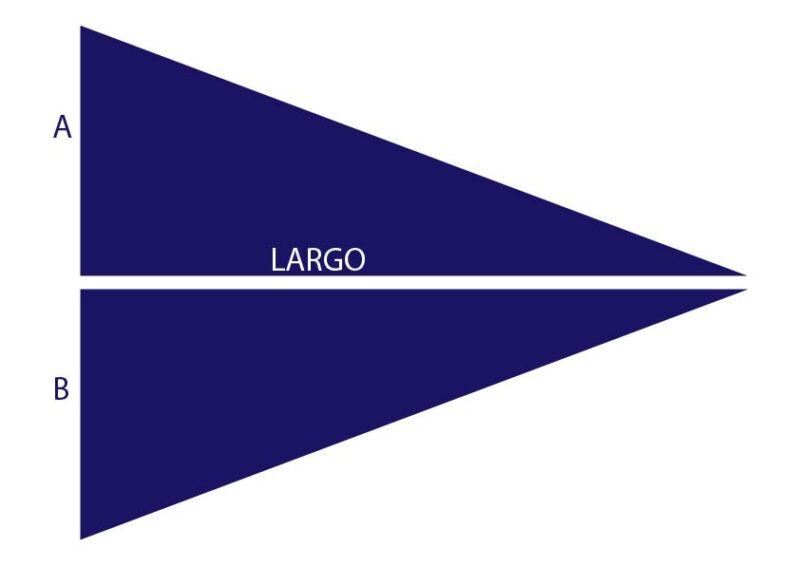
Minimum Ramp Length = Height Difference A or B / Maximum Slope (%)
The minimum ramp length must be such that it satisfies the relationship between the height difference and the maximum slope, in order to avoid situations where the excessive ramp slope causes level crossings.
If you find this information interesting, we advise you to subscribe to our newsletter. You will periodically receive articles of interest on loading docks and logistics in general.