

IFS Logistics certification is the international standard that guarantees safety and quality in the transport, storage, and distribution of products.
If you want to ensure the integrity of your supply chain, eliminate legal risks, and access the most demanding markets, this certification is not an extra, but an essential strategic pillar.
What is IFS Logistics and why is it critical for your company?
IFS certification (International Featured Standards) is a voluntary global standard that connects trade and industry to provide transparency. Its purpose is to ensure that all products, both food and non-food, are handled under optimal conditions throughout the entire logistics chain.
In practice, the IFS Logistics standard can be understood as a uniform assessment system that ensures quality and safety in logistics. It is not only about moving goods, but about:
- Ensuring that every link in the logistics chain complies with demanding standards, such as those defined by GFSI (Global Food Safety Initiative).
- Ensuring proper handling, storage, and transport of products.
- Reducing supply chain-related risks.
For you, as a purchasing or quality manager, it is essential to understand that many problems in goods flow are not caused by a lack of transport, but by a lack of confidence in supplier processes.
In this regard, certification acts as a safety filter that helps you to:
- Validate that your suppliers comply with internationally recognised standards.
- Reduce operational and reputational risks.
- Protect your investment by ensuring the reliability of the entire logistics chain.
How does IFS Logistics certification protect your brand reputation?
A failure in product traceability can lead to public scandals and devastating financial penalties. IFS Logistics certification offers strong brand protection by ensuring full traceability from origin to final destination.
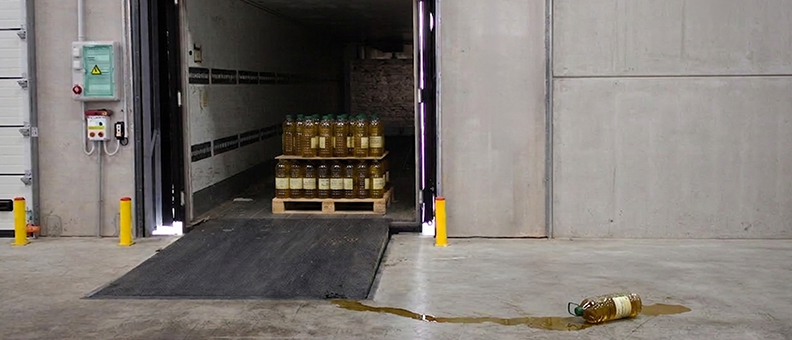
By working with certified suppliers, you drastically reduce the likelihood of:
- Stock shortages caused by health-related incidents.
- Contractual non-compliance with major retailers.
- Product contamination during storage or transport.
This standard also enables fast supplier approval, as certification functions as a “passport” that internationally validates the company’s technical competence.
What are the biggest operational risks stopping your goods flow today?
Mechanical problems are only the surface; the real pain lies in the operational consequences. Ice formation on doors, constant thermal losses, and workplace accidents are the factors that truly drain your profitability.
| Operational Risk | Financial Consequence | Quality Impact |
|---|---|---|
| Temperature leakage | Increased energy costs and batch rejection | Break in the cold chain |
| Lack of visibility | Delivery miscoordination and delays | Loss of traceability |
| Dock accidents | Costs due to sick leave and occupational risk penalties | Unsafe food handling |
Every minute a truck waits at a non-sealed dock translates into financial losses and operational risks. Inefficiency is not only a matter of time, but of control over food safety under IFS requirements and product integrity.
Is IFS Logistics the technical ally your quality department needs?
IFS Logistics certification acts as a technical ally that facilitates audits and strengthens the rigour of the management system.
Complying with this standard means keeping key aspects under control, such as:
- Critical Control Points (CCPs).
- HACCP systems.
The standard also requires constant monitoring, which provides several advantages:
- It simplifies preparation for external audits.
- It strengthens traceability and process control.
- It ensures consistency in quality management.
Thanks to this approach, food transport is carried out under strict controls of:
- Hygiene.
- Temperature.
- Handling conditions, regardless of the type of product.
Lastly, compliance with local and international regulations:
- Reduces the risk of health-related penalties.
- Improves the organisation’s reputation.
- Strengthens the confidence of consumers and business partners.
How do loading docks affect compliance with the IFS standard?
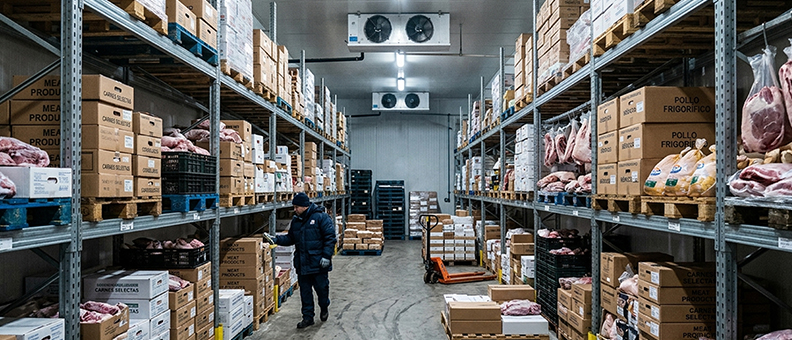
Loading docks are one of the most critical points in complying with the IFS standard, as this is where the cold chain is most likely to be broken.
To obtain and maintain the quality seal, it is essential to ensure adequate thermal insulation in these areas exposed to the outside environment.
The challenge is not understanding what a dock is, but preventing it from becoming the point where quality and food safety standards fail.
Impact on the cold chain and quality
When the dock is not properly designed or protected, the following may occur:
- Temperature losses affecting the cold chain.
- Entry of contaminants such as dust, insects, or other external agents.
- Risk of non-compliance with IFS audit requirements.
Technical solutions integrated into operations
To minimise these risks, there are solutions that integrate directly into dock design and daily operations.
- The vertical loading dock leveller allows the door to close completely to floor level, reducing temperature losses and preventing the entry of external contaminants.
- Insulated dock shelters, especially inflatable versions, inflate around the truck body and ensure tighter sealing during loading and unloading, minimising air exchange with the outside.
- Dock levellers facilitate cleaner and more controlled operations, helping reduce contamination risks and simplifying maintenance and hygiene tasks.
Finally, the correct implementation of occupational risk prevention protocols in loading and unloading reinforces staff safety and ensures compliance with current occupational health and safety regulations.
What are the real steps to obtain this safety certification?
Obtaining IFS Logistics certification is not a one-day achievement; it requires a serious commitment to continuous improvement. The process is structured to raise the standard of each of your logistics operations.
- Initial assessment: Identify areas for improvement in your current processes.
- Selection of the certification body: Choose an accredited organisation to carry out the external audit.
- Implementation: Update procedures, train staff, and improve infrastructure, such as loading systems.
- Internal audit: Ensure compliance before the official assessment.
- External audit and corrective actions: The certification body evaluates the facilities and, if there are non-conformities, they must be corrected with clear evidence.
Once obtained, the process does not end. Follow-up audits, which may be unannounced, ensure that your company maintains long-term operational excellence.
Frequently asked questions
What type of activities are covered by IFS Logistics certification?
It covers all logistics activities involving transport, whether maritime, air, or road, storage, whether ambient, chilled, or frozen, and distribution to retail points or final customers.
Is this certification mandatory to operate in logistics?
It is a voluntary standard, but it has become an essential requirement for working with major distributors and accessing international markets.
How does certification help reduce operating costs?
It promotes the implementation of best practices and optimised processes, reducing inefficiencies, preventing product damage, and minimising the risk of legal penalties.
What makes IFS different from other quality standards?
It focuses specifically on product integrity throughout the entire logistics supply chain and is a standard recognised by GFSI.
IFS Logistics as the foundation for safe logistics operations
IFS Logistics certification aligns quality, efficiency, and safety across the supply chain, ensuring consistency among the different stakeholders. Its implementation safeguards product integrity and reinforces service reliability in demanding environments.
We develop solutions designed to minimise incidents related to temperature and hygiene, both of which are key factors in audits. Reviewing protocols and infrastructure helps reduce risks and improve operational performance.
Contact our sales team to strengthen compliance and improve audit readiness.
