
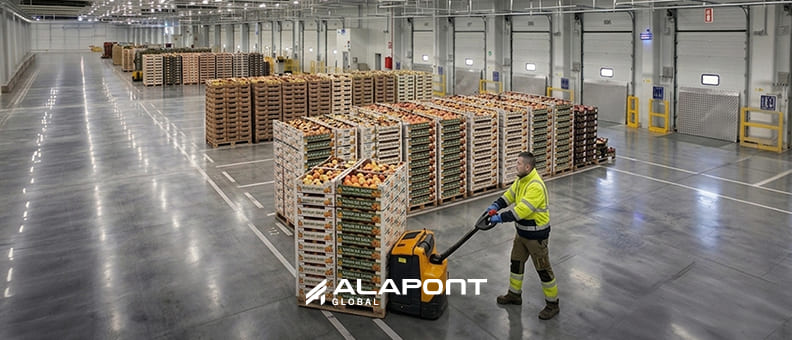
Achieving controlled temperature conditions in a loading dock area is essential to ensure cold chain integrity.
The loading area concentrates most of the risks, as it is the point where the conditioned indoor environment is exposed to the outside. Temperature fluctuations, humidity, and operational inefficiency can increase costs and affect product safety.
Why is the loading area the biggest challenge for the cold chain?
At this point, the main exchange between the indoor and outdoor environments takes place, even in facilities equipped with efficient refrigeration systems. This exposure directly affects process stability.
This is where the main risks associated with critical temperature control points are concentrated, especially during loading and unloading operations.
Main problems at this critical point
- Constant thermal exchange: Indoor cold air mixes with warmer outdoor air when the truck is at the dock.
- Prolonged door opening: The longer the doors remain open, the greater the loss of cold air.
- Imperfect sealing: Poor fitting between the truck and the warehouse allows warm air to enter rapidly.
- Increased energy consumption: Refrigeration equipment must work harder to compensate for thermal losses.
- Moisture ingress: Outside air introduces moisture that affects thermal stability.
- Ice formation: Moisture can freeze on doors and dock levelers, making operations more difficult.
- Higher risk of accidents: Ice and condensation increase the risk of slipping.
How do thermal leaks affect your warehouse profitability?

The impact of failing to properly control thermal exchange at loading docks translates directly into three clear financial pain points:
- Higher energy costs: Refrigeration systems consume large amounts of energy; the greater the temperature difference between indoors and outdoors, the higher the operating cost.
- Product loss: An increase of just a few degrees may lead to bacterial growth in food products or loss of effectiveness in pharmaceutical products such as vaccines.
- Unjustified rejections: Without measurement tools, it is difficult to prove that the temperature was correct at the time of loading, leaving you exposed to claims at destination.
For this reason, carrying out a temperature leakage assessment is essential to identify where money is being lost and which dock components require a technical upgrade.
Which components are essential for an airtight loading dock?
To solve these issues, a standard dock leveler is not enough; you need an ecosystem of components designed to ensure tight sealing. Dock shelters are the essential link in this process, as they create the connection between the truck and the building.
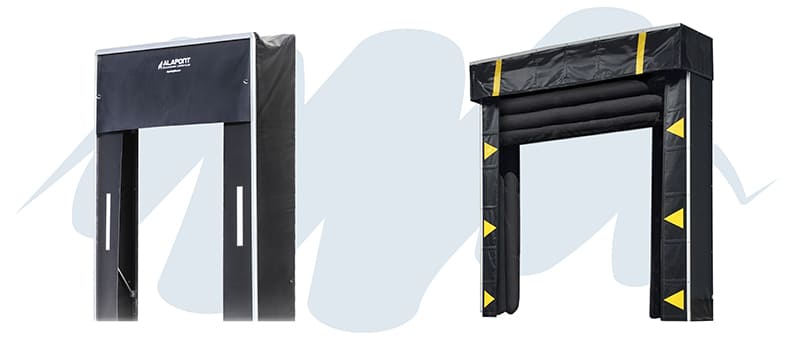
There are two main thermal insulation solutions depending on your level of exposure:
- A retractable dock shelter is ideal when adaptability to different truck types and effective protection against moderate weather conditions are required. Its structure, based on a flexible steel frame with high-resistance technical curtains, helps protect the loading area from wind and rain without compromising operations.
- An inflatable dock shelter is the most advanced solution for facilities with high thermal demands. Once inflated around the rear of the truck, it creates an almost hermetic seal that acts as an extreme insulation barrier during loading and unloading operations.
Once loading is completed, the cushions of the inflatable dock shelter deflate quickly with internal tensioning systems, allowing the vehicle to leave swiftly without compromising the dock structure.
How to choose between vertical and telescopic dock levelers?
The choice of dock leveler is crucial to avoid breaking cold chain protocols in supply chain. Here is a comparison to help you decide which option best suits your facility:
| Type of leveler | Feature | Advantage for the cold chain |
|---|---|---|
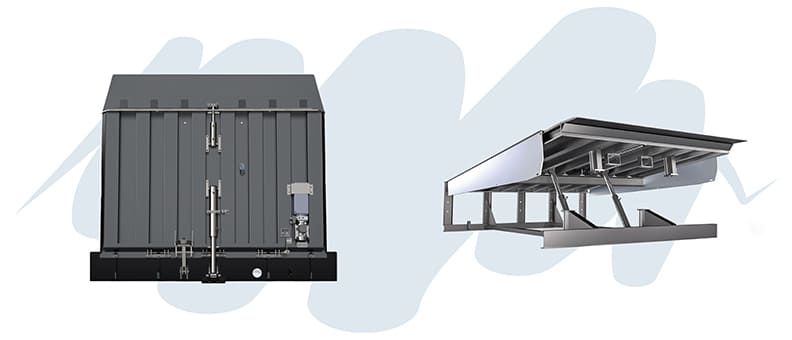
| Vertical dock leveler | Stored in a vertical position inside the building. | Allows the truck doors to be opened inside the building, preventing any contact between the load and outside air. |
| Telescopic dock leveler | Equipped with a movable retractable lip. | Allows the sectional dock door to close completely in front of the leveler, sealing in the cold. |
If your priority is maximum hygiene and total temperature control, the vertical dock leveler is considered the flagship solution for food and pharmaceutical logistics platforms.
How to minimize energy consumption from dock door openings?
Every time a truck opens its doors in the loading area, cold air escapes and warm air enters, increasing energy consumption by forcing refrigeration systems to compensate for the temperature change.
The key lies in operational planning. Poorly organized loading can extend door opening time by up to 30%. Optimizing goods preparation and coordinating loading and unloading processes reduces exposure time and improves efficiency.
Keys to reducing the impact
- Optimize the loading and unloading sequence to avoid unnecessary waiting times.
- Prepare goods in advance in well-organized staging areas.
- Coordinate teams to speed up dock operations.
- Use planning systems that reduce downtime.
When modifying the warehouse structure is not possible, external solutions are available to help maintain a controlled environment. In this context, a table for an isothermal tunnel facilitates the transfer of perishable goods in a partially sealed space, reducing cold loss during handling.
Taken together, process optimization and the use of insulation solutions at the loading point make it possible to reduce the impact of door opening on energy consumption and cold chain performance.
What role does monitoring technology play in food safety?
Monitoring technology makes it possible to move from reactive control to proactive control, ensuring cold chain integrity at all times. This improves product quality and reduces the liability of the logistics operator.
At the loading point, a probe thermometer makes it possible to verify the goods before loading. If the goods do not meet the proper temperature ranges, this can be recorded on the consignment note (CMR) as evidence.
Digitalization expands this control through advanced systems such as:
- Real-time monitoring through connected sensors.
- Automatic alerts in the event of temperature deviations.
- Continuous data logging for auditing and traceability.
In this regard, temperature data loggers and real-time temperature sensors ensure that sensitive products such as meat, dairy products, or medicines remain within safe ranges throughout the entire process.
Taken together, these technologies strengthen food safety by reducing errors, improving traceability, and preventing out-of-range products from reaching the final consumer.
Frequently asked questions
What is the right temperature range for chilled and frozen products?
Chilled products (fruit, dairy products, meat) usually require temperatures between 0°C and 10°C, while frozen products must be kept below -18°C to ensure optimal preservation.
How does an inflatable dock shelter help save money?
By inflating around the truck, it eliminates the gaps through which cold air escapes. This reduces the workload on refrigeration units, lowering the monthly electricity bill of the warehouse.
What happens if I fail to comply with food hygiene regulations?
Failure to comply with regulations such as regulation (EU) Nº 852/2004 may lead to serious financial penalties and, even worse, loss of customer trust by putting food safety at risk.
Conclusions on thermal control at the loading dock
Maintaining controlled temperature conditions in a logistics center is not only a regulatory requirement, but also a way to improve profitability and reduce waste.
The loading dock is the most critical point of the operation, where the greatest thermal losses are concentrated. As a result, infrastructure and equipment directly influence process efficiency.
At Alapont Global, we understand these challenges. As manufacturers, we design tailor-made solutions, such as high-strength steel loading ramps with sealing systems designed to minimize thermal leaks at the dock.
If you want to optimize your loading area, we can carry out a personalized assessment of your logistics facility.
