
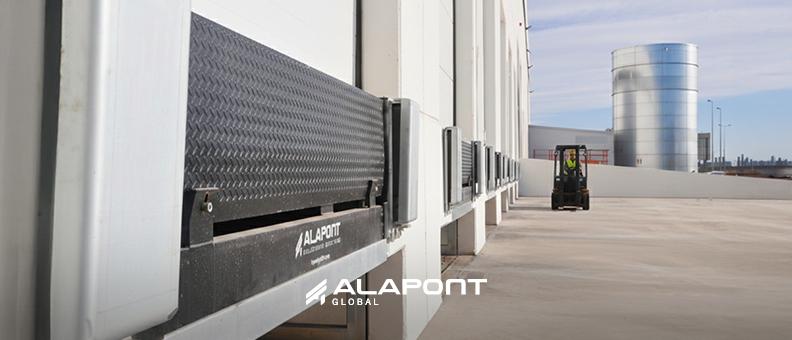
The dock leveler is a critical component in the efficiency of any loading dock, acting as the essential bridge between the warehouse and the transport vehicle. However, its position at the operational interface exposes it to intensive use and constant wear. Extending its service life is not a matter of chance, but the direct result of rigorous asset management and proactive maintenance protocols.
For operations management, understanding the factors that accelerate dock leveler deterioration is the first step in protecting this strategic investment.
Key factors of accelerated deterioration
A dock leveler is designed to withstand high dynamic loads, but several operational and environmental factors can compromise its durability.
Improper impact and mechanical stress
- Forklift impacts: Repeated accidental impacts from forklifts, especially on the lip and pit area, are the main cause of steel deformation and component misalignment.
- Excessive point loads: Use of handling equipment with loads exceeding the dock’s rated capacity, or loads concentrated on a reduced surface area.
Wear due to friction and fatigue
- Lip wear: Continuous friction between the dock lip and the truck bed leads to gradual material loss, compromising alignment and smooth transition between surfaces.
- Non-standard intensive use: Excessive operating cycles or use of the dock leveler as an extension of the staging or temporary storage area.
Failures in hydraulic and electrical components
- Fluid contamination: The ingress of dirt or moisture into the hydraulic system accelerates wear of seals and pumps, leading to leaks and lifting failures.
- Electrical issues: Deterioration of cables and components due to abrasion, moisture, or impact can disable the control and movement system, forcing the dock leveler out of service.
Proactive maintenance strategies and standardization
Extending the service life of a dock leveler requires a dual approach: standardized operation and planned maintenance.
Proper use protocols and operator training
Implementing and strictly enforcing operating protocols is the most cost-effective preventive measure.
- Centered loading: Train forklift operators to maintain constant speed and centered loads when crossing the dock leveler and lip.
- Minimizing approach impacts: Use of proper truck guides and dock bumpers to ensure correct vehicle positioning before deploying the dock leveler.
- Rest position: The dock leveler must be returned to its locked rest position (fully retracted and level with the floor) immediately after operations to prevent forklift impacts on the exposed lip.
Structured preventive maintenance
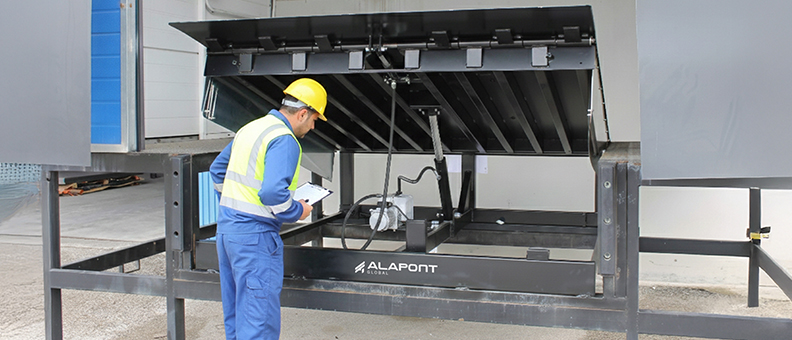
A preventive maintenance (PM) program is essential for early wear detection.
Scheduled inspections (semi-annual/annual): Comprehensive review of all wear points:
- Hydraulic system: Check hydraulic fluid level and quality; inspect hoses and seals for leaks.
- Mechanical components: Lubrication of hinges and pivot points; verification of structural anchors.
- Structure and welds: Inspection for fatigue cracks, particularly at lip connection points and internal reinforcements.
Structural focus: reinforcements and lip
The lip and internal structure are the most highly stressed components.
- Inspection of internal reinforcements: Check the beam structure beneath the platform for deformations caused by overloading. High-quality dock levelers incorporate reinforcements that increase fatigue resistance.
- Preventive lip replacement: The lip is a consumable component. If its thickness is significantly reduced—compromising overlap with the truck bed—or if severe deformation is present, preventive replacement is more cost-effective than a total operational failure.
The dock leveler is a high-performance asset that requires attentive management. Through operational discipline, strict usage protocols, and investment in well-scheduled predictive and preventive maintenance, companies can maximize equipment lifespan, minimize the risk of unexpected breakdowns, and ensure uninterrupted continuity of logistics operations.
