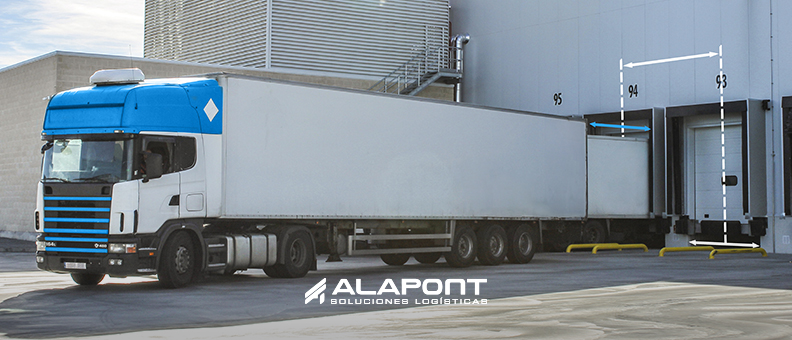
When designing a loading bay it is essential to take into account, such as the parking and manoeuvring space in front of the dock should, the minimum space between the truck and the dock, or the space between loading points.
Below we show you some recommended distances in the installation of loading bays
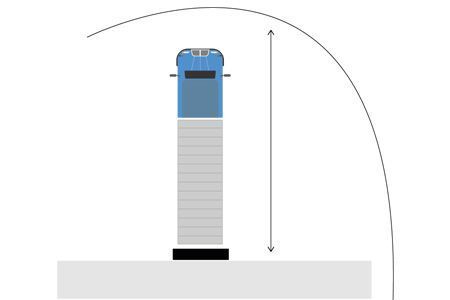
Minimum space between the truck and the dock wall
When designing a loading bay, it’s crucial to consider the minimum space required between the docked truck and the dock wall. This clearance is essential for safe and efficient loading and unloading operations, ensuring adequate space for personnel and equipment movement.
Several factors influence the optimal clearance, but a good starting point is a minimum distance of 1.4 metres between the truck and the dock wall. This recommendation aligns with widely accepted industry standards.
If your facility anticipates handling semi-trailers, allocating a larger clearance may be prudent. Some sources suggest a distance of 32 metres in front of the dock to facilitate manouvering of these larger vehicles.
While a larger clearance offers more room for manouvering, it also increases the overall footprint of the loading area. In some cases, a reduction of 2 centimetres might be acceptable, provided a minimum gap of 2.000 millimetres (2 meters) remains between the docked vehicles. This approach prioritizes efficiency while maintaining a safe working environment.
Always remember that these are general guidelines. It’s essential to consider the types and sizes of trucks expected at your facility to determine the most suitable clearance for your needs.
Distance between loading bays
When designing a loading bay, ensuring adequate space between parked trucks is crucial. This prevents issues like door-swinging problems and facilitates smooth manoeuvring during parking and exiting. There must be a distance of 4.000 mm between the central axes of two loading and unloading stations. In this way, we ensure that large trucks can open the doors while they are in use. With a four-metre separation between the two platforms, we leave enough space for the dock shelter.
Refrigerated & Freezer Trailers:
These trailers necessitate slightly more space due to thicker insulation and potential door swing variations. Aim for a centre-to-centre distance of between 4.2 and 4.4 metres for refrigerated and freezer trailers

Distance between the last truck and the side wall
Regardless of trailer type, from the last truck to the side wall there must be a minimum distance of 1.4 metres to allow the door to open properly is recommended. Thus, there shall be a minimum gap of 2400 mm between the wall and the axis of the loading dock door.
This ensures safe and efficient movement of personnel and equipment during loading and unloading activities.
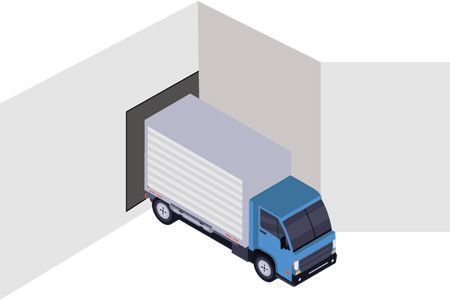
Distance between the ground and the loading dock
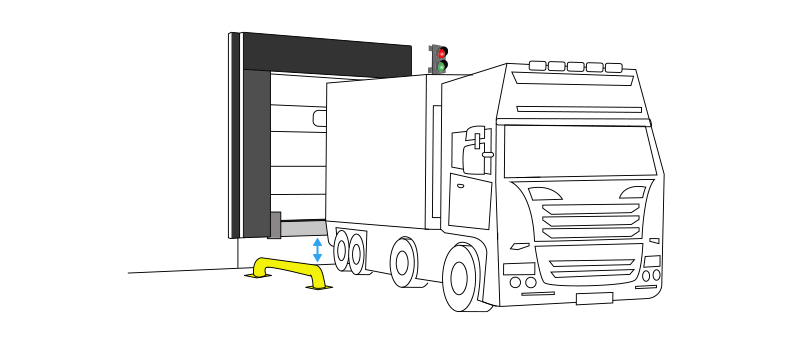
The optimal distance between the ground and the loading dock leveller, also known as the “dock height,” depends on the types of vehicles that will be accessing the dock for loading and unloading activities.
Understanding the primary vehicles using the dock is crucial. Standard trucks typically have bed heights ranging from 1.10 to 1.20 meters. If your facility expects a majority of standard trucks, a platform height within this range would be suitable.
Still have questions about loading dock distances? Contact us now to ensure the optimal distances for your specific needs.