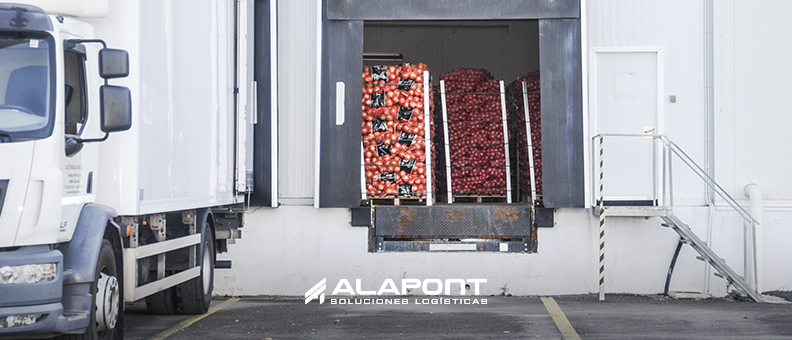
Problems with your loading and unloading dock? At Alapont Global, we’ve put together a list of the five most common issues that our customers experience in their company loading and unloading bays.
We’ll then explain the solutions to these problems, which may come in handy if you’re company is experiencing one of them. If you need more assistance, don’t hesitate to contact us so we can take a closer look at your problem and find the best way to solve it.
1. Sectional doors worn down by friction with trucks
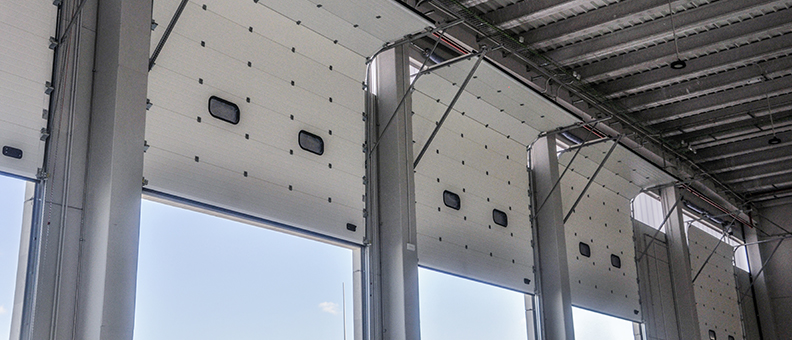
Overhead sectional doors settings will often become worn down, especially on the last meter before the floor, as a result of trucks rubbing against their sides during the loading and unloading of goods. Continuous friction can eventually cause the door to malfunction, especially if it takes place in an area with frequent movement.
One solution to avoid this is to install a protection system in front of the area at risk, such as bollards. This way, forklifts and pallet trucks won’t impact the door, preventing possible future malfunctions. For further protection, we also recommend using accessories that will prolong the lifespan of your loading area, increase safety and improve efficiency.
2. Wear on loading dock welds
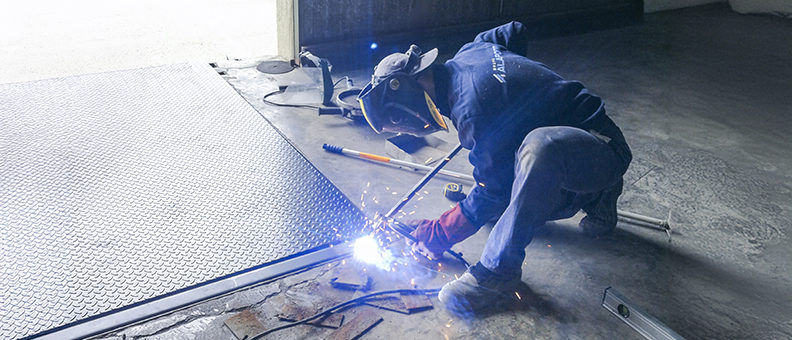
If the welds on your loading dock have deteriorated, it could pose a severe risk to the operators who work on it. If maintenance isn’t carried out and the five welds that hydraulic levelers typically have become loose, they could break away from the platform and cause accidents.
Proper use and care of the leveler are vital for prolonging its operational lifespan. The vast majority of cases involving excessive and premature wear are due to improper use, especially when loads are dragged across the surface instead of unloading the goods using pallets or elevating them off the ground.
You can find all the information you need about maintaining it via the following link.
3. What measurements do I need for a loading dock renovation?
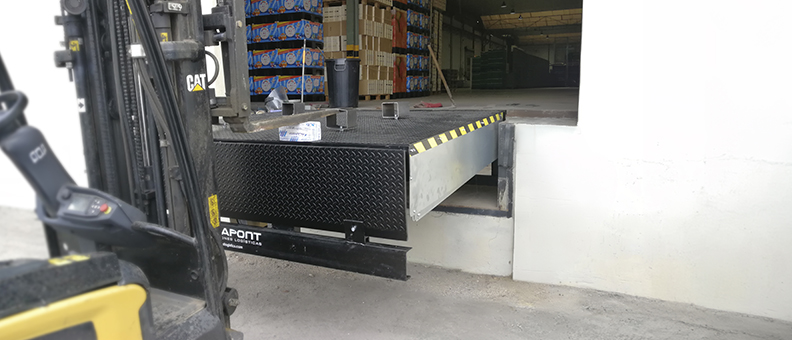
One of the most common headaches in warehouses or logistics centers comes with the need to replace or renovate the dock leveler in the loading area.
The custom loading dock ramp from Alapont Global, once manufactured, only needs one day for installation. Thanks to its perfect fit in the existing space, it is not necessary to carry out costly construction work. This also represents significant savings, both economically and in terms of labor, as it does not require nearly halting production.
You can find more information about the advantages and features of the custom loading dock ramp at the following link.
4. The hinges of the fold-down lip of the dock leveler break too easily
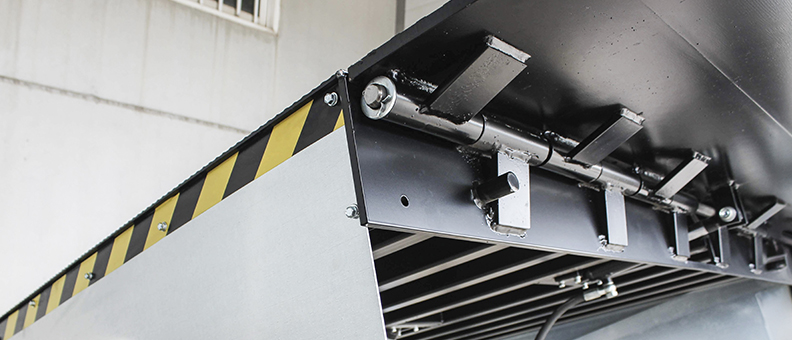
Unlike the competition, Alapont Logistics manufactures all of its hydraulic levellers with welded hinges. This is essential, as they would otherwise come apart easily. The problem with hinges is that, until they break, there’s no sign that they need to be changed.
That’s why preventive checks are of vital importance. This way, you’ll avoid having to pause production while the folding lip is repaired. Maintenance will save you not just time, but money, as repairing hinges will always be more expensive than regularly checking them.
5. What type of truck protection bumper should you choose to extend the lifespan of the loading dock?
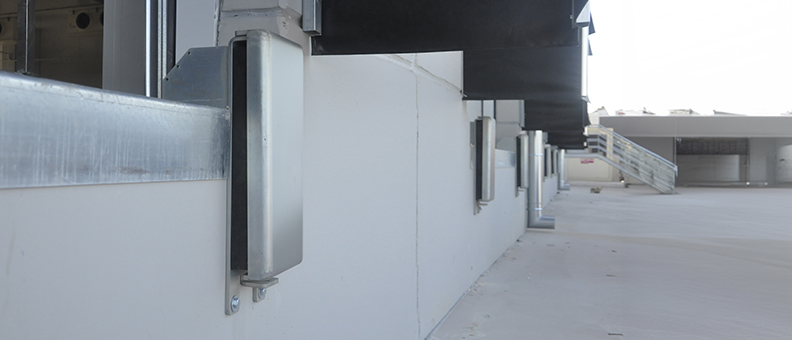
Due to the function and use of protection bumpers, they must be durable and resistant, which is why they’re made from materials capable of withstanding and absorbing impacts from trucks. At Alapont Global, we offer a range of protection bumper models for loading docks, featuring all the necessary guarantees for users. Bumpers come in a variety of forms, such as steel, rubber, mobile and square-shaped.
It’s essential to choose the right model for you and ensure its proper maintenance. Alapont Global recommends installing a metal bumper, as it’s more capable of vertical displacement, in line with the truck’s movements. This reduces friction with the vehicle and, as a result, the bumper suffers from less wear and tear.
Have we solved your problem? If not, Get in touch with us and we’ll take an in-depth look at your case to find the best possible solution.