
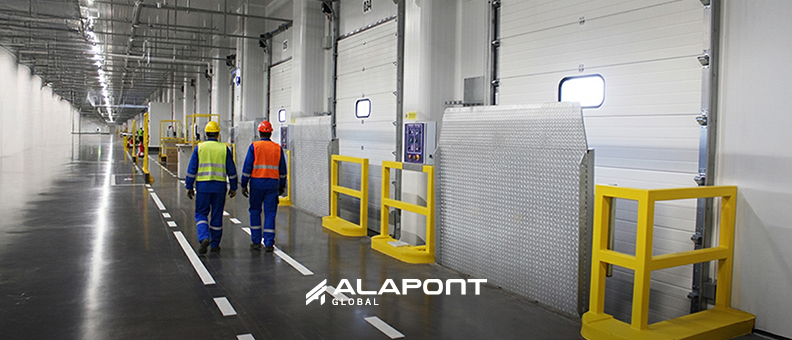
For organizations operating facilities with climate-controlled or temperature-sensitive goods transfer areas, the thermal integrity of the loading dock is a critical factor.
Poor sealing at this operational interface not only leads to a substantial increase in energy costs but also jeopardizes compliance with product quality standards, particularly within the cold chain.
Addressing thermal leakage at loading docks must therefore be considered a strategic asset management priority.
Diagnosing Energy Dissipation at the Building–Truck Interface
Energy loss at the loading dock is not an isolated event, but rather the result of multiple failures in the building envelope during logistics operations. The primary sources of thermal dissipation include:
- Prolonged exposure: Unnecessary or extended door opening times.
- Sealing deficiencies: Significant air infiltration through perimeter gaps between the truck body and the building structure.
- Compromised enclosure: Use of worn dock shelters or shelters inadequately sized for the vehicle fleet.
- Structural thermal bridges: The presence of standard pit-style dock levelers, which facilitate heat or cold transfer through the building structure.
These losses place excessive demand on HVAC systems, directly resulting in higher operating costs and an increased carbon footprint.
Active Insulation Strategies for Loading Docks
Implementing advanced technical solutions is essential to redefine the loading dock as a controlled extension of the warehouse rather than a structural weak point.
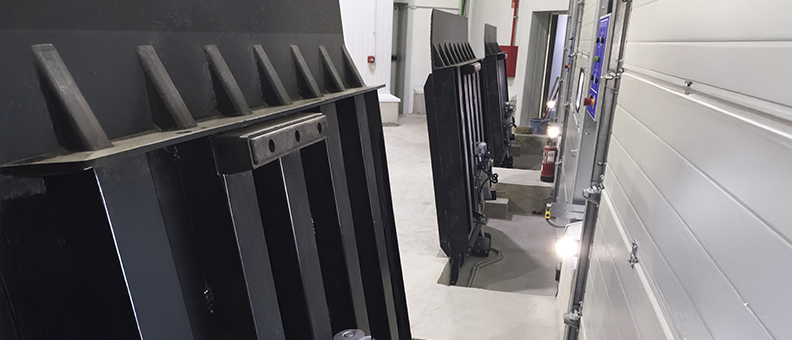
Integration of the Vertical Dock Leveler
The vertical dock leveler represents the optimal architectural solution for temperature-sensitive operations. Its design allows the leveler to be stored vertically behind the sectional door.
Truck doors are opened only after the vehicle is correctly docked and the warehouse door is closed, ensuring maximum airtightness and the complete elimination of thermal bridges associated with dock pits.
Ideal Application: Frozen and deep-frozen logistics, as well as pharmaceutical and healthcare industries.
Maximum Compression Sealing with Inflatable Dock Shelters
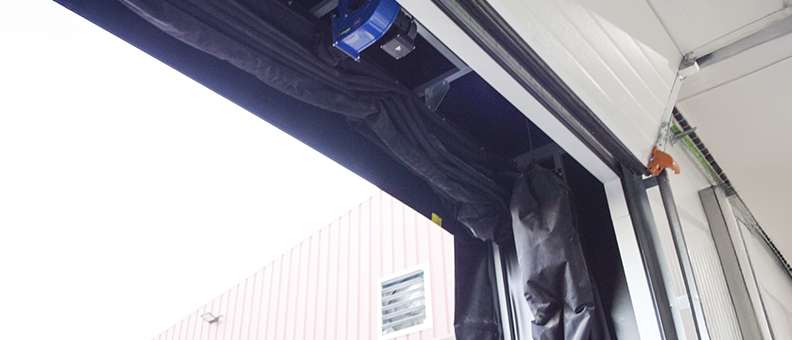
Inflatable dock shelters provide the highest level of sealing performance. Through an air compression system, the shelter inflates and conforms to the truck’s contour, regardless of vehicle dimensions, creating a complete three-dimensional seal.
Air currents and infiltration are virtually eliminated, significantly reducing the energy demand placed on climate control systems.
Sequential Automation (Pre-Loading Systems)
The implementation of logical pre-loading and automated sequencing systems prevents operational errors that typically lead to thermal leakage.
A safety and efficiency protocol:
The system can condition the opening of the internal door on a critical validation sequence:
- Vehicle correctly positioned and secured.
- Dock shelter fully inflated and sealed.
- Dock leveler leveled and ready for load transfer.
This automation minimizes exposure time and ensures continuous climate control.
Return on Investment Through Airtightness
Investment in an optimized loading dock system, including vertical dock levelers, inflatable dock shelters, and automation, should be viewed as a long-term risk mitigation and profitability enhancement strategy.
The right solutions not only safeguard cold chain continuity and reliability, but also deliver measurable and significant annual energy savings that fully justify the initial investment. The loading dock must operate with the same level of thermal integrity as the rest of the facility.
Contact us now for more technical information.
