
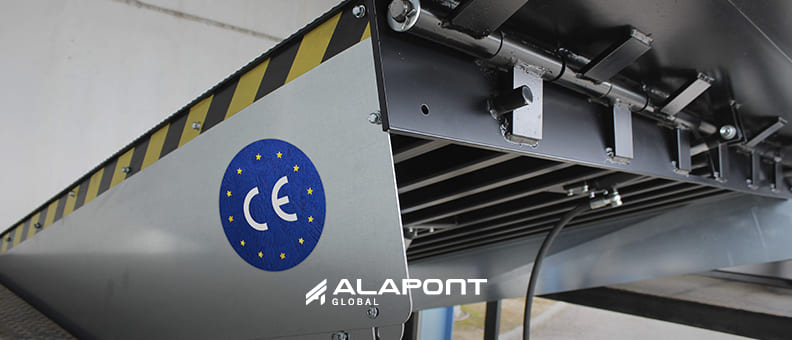
CE marking is the symbol by which a manufacturer declares, under its sole responsibility, that its product complies with the legal, technical and safety requirements established by European Union regulations.
It acts as a passport for the free movement of goods within the European single market, guaranteeing minimum standards for the protection of health, safety and the environment.
What is CE marking and what is it used for?
CE marking is the manufacturer’s declaration that a product has undergone a conformity assessment procedure before being placed on the market.
Its main purpose is to harmonise technical criteria across the 27 Member States, ensuring that all products marketed within the European Economic Area (EEA) comply with the same safety rules.
It is important to understand that CE marking is not a commercial quality mark and does not indicate that the product was manufactured in the EU. It certifies that the product is safe to be placed on the market and put into service.
Without it, Member States may restrict the sale of products that fall within the scope of specific European directives or regulations.
What does CE stand for?
The initials CE come from the French term “Conformité Européenne”, which means European Conformity.
By affixing these letters to a piece of equipment, the legally responsible party declares that the product meets the essential safety requirements set out in the applicable EU regulations for its category.
What does CE marking mean in industrial environments?
In industrial environments, CE marking is the basis for regulatory compliance and workplace safety. An efficient loading dock depends on its critical components not posing a risk to operators.
To ensure safe operations in compliance with regulations, it is advisable to rely on a guide to safety protocols for goods handling that considers both equipment requirements and applicable working procedures.
Within this infrastructure, two critical elements stand out:
- CE certification for industrial doors makes it possible to verify that opening and closing systems include the necessary safety devices to prevent entrapment or accidental falls.
- CE certification for loading dock levellers ensures that the equipment has been designed to withstand heavy dynamic loads and includes safety valves in the event of possible vehicle movement.
What regulations govern CE marking?
The legal framework is based on the New Approach Directives, which establish specific design and manufacturing requirements.
Key regulations include:
- Regulation 765/2008 and Decision 768/2008: Define the common framework for placing products on the market and conformity assessment procedures.
- Directive 93/68/EEC: Regulates the format and visual characteristics of the CE mark.
- Directive 2001/95/EC: Relates to general product safety and applies to any product that may be purchased by a consumer, even if it does not require specific CE marking.
Who affixes CE marking to a product?
The sole responsibility for affixing CE marking lies with the manufacturer, regardless of whether the manufacturer is located inside or outside the European Union.
If an importer places a product from a third country on the market under its own brand, it legally assumes all the obligations of the manufacturer.
Distributors, for their part, must act with due diligence to verify that the product is safe and carries the correct marking.
What is the procedure for obtaining CE marking?
The process for certifying an industrial product consists of several mandatory technical steps:
- Identify the applicable directives: Determine which European standards and regulations apply to the equipment.
- Conformity assessment: Carry out the relevant technical tests. For higher-risk products, such as certain types of machinery, a Notified Body must be involved, and its four-digit identification number must appear next to the CE mark.
- Technical file: Prepare and maintain the documentation proving conformity for at least 10 years.
- EU Declaration of Conformity: Draft and sign the document in which the manufacturer assumes full responsibility for the product.
What should you request from a supplier of CE-marked equipment?
As a purchasing manager, it is not enough to see the CE logo on the machine.
To validate the investment, you should request:
- EU Declaration of Conformity: The legal document in which the supplier confirms that the equipment complies with all applicable harmonisation legislation.
- Instruction manual: This must be supplied in the official language of the country where the equipment will be put into service.
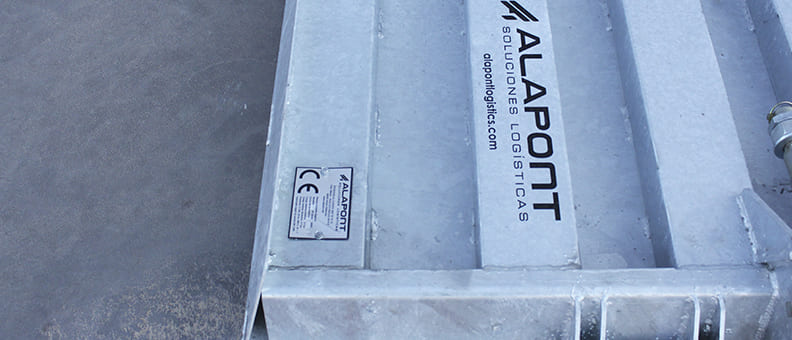
- Identification plate: The marking must be visible, legible and indelible, affixed directly to the product or, where this is not possible, to the packaging.
Frequently asked questions about CE marking
Is CE marking mandatory for a dock leveller?
Yes. Dock levellers and loading platforms are considered machinery under the Machinery Directive and must comply with the essential safety requirements in order to be legally marketed in the EU.
What documentation must a manufacturer provide together with CE marking?
In addition to the EU Declaration of Conformity and the user manual, the manufacturer must ensure that it holds a technical file containing drawings and test results, available to market surveillance authorities.
Can industrial equipment be marketed without CE marking?
Only if the product is not covered by any directive or regulation requiring this marking.
However, most logistics and industrial equipment requires certification in order to be legally placed on the European single market and put into service.
How can I distinguish CE marking from the China Export mark?
Official CE marking maintains a clear distance between the “C” and the “E”, based on two intersecting circles.
The China Export mark has the letters much closer together and only indicates origin, not compliance with safety regulations.
Ensuring compliance with CE marking for industrial doors and loading dock levellers is essential to avoid administrative penalties and guarantee the safety of your operational team.
By validating the EU Declaration of Conformity and working with suppliers that maintain a rigorous technical file, you help protect business continuity and the integrity of your industrial supply chain.
