

HQE (Haute Qualité Environnementale) building certification is a French environmental assessment system that certifies the performance of a construction project according to sustainability, efficiency and environmental quality criteria.
It is part of the family of environmental building certifications alongside international standards such as LEED and BREEAM, although it follows its own approach, focusing on overall environmental quality, operational efficiency and occupant comfort.
It assesses both residential and non-residential buildings, including logistics platforms, taking into account their impact on the surrounding environment, facility management and indoor environmental conditions.
What is HQE?
HQE is an internationally registered trademark owned by the HQE Association, which has been promoting sustainable development in buildings and urban planning for more than two decades.

Unlike other certification systems, HQE assesses the environmental performance of a building throughout its entire life cycle, from design and construction to operation and renovation.
Internationally, the certification process is managed by Cerway, which verifies compliance with the established criteria through audits. For a logistics platform, HQE certification provides strategic benefits such as:
- Demonstrating a commitment to sustainability and environmental quality.
- Improving energy and resource management efficiency.
- Improving environmental conditions and occupant comfort.
- Increasing the value of the asset for customers, investors and other stakeholders.
What types of buildings can be HQE certified?
HQE certification can be applied to a wide range of buildings, adapting its assessment criteria to the characteristics and requirements of each project.
The main types of buildings eligible for HQE certification include:
- Logistics and industrial facilities: Logistics platforms, distribution centres and industrial buildings seeking to improve energy efficiency, temperature control and the sustainability of their operations.
- Offices: Public and private administrative buildings designed to optimise occupant well-being and energy performance.
- Hospitals and healthcare facilities: Buildings where air quality, water quality and indoor comfort are key priorities.
- Schools and universities: Educational buildings designed to provide healthy and efficient environments for students and staff.
- Hotels: Hospitality facilities seeking to improve the guest experience while reducing their environmental impact.
- Residential buildings: Single-family homes and multi-unit residential buildings through specific schemes such as NF Habitat HQE.
- Retail and shopping centres: Commercial buildings seeking to reduce energy consumption, improve comfort and optimise operating costs.
What does the HQE system assess?
HQE certification assesses a building’s environmental performance through four main pillars, developed across 14 performance targets related to the design, construction, operation and maintenance of the building.
The main pillars of HQE certification
These pillars assess the building’s overall performance from an environmental and operational perspective, taking into account resource management, occupant comfort and indoor environmental quality.
| Pillar | What it assesses | Examples |
|---|---|---|
| Eco-construction | Design and integration | Materials, surrounding environment |
| Eco-management | Resources | Energy, water, waste |
| Comfort | Well-being | Temperature, noise, lighting |
| Health | Environmental quality | Air, water, hygiene |
The level of compliance is determined through audits and varies according to the certification scheme applied to the project, with ratings ranging from Acceptable to Exceptional.
How do you obtain HQE certification?
The process of obtaining HQE certification is rigorous and generally follows a series of key stages designed to ensure transparency and impartiality.
- Definition of objectives: The applicant defines the environmental targets to be achieved by the project.
- Registration and contracting: A formal application is submitted and Cerway verifies the building’s eligibility to begin the certification process.
- Audits: Independent third-party assessments are carried out to verify compliance with the technical high environmental quality criteria.
- Document review: The certification body reviews the audit reports and the documentation submitted.
- Certification: The final certificate is issued once the closing audit has been approved.
- Follow-up: For buildings in operation, periodic audits are carried out to ensure that performance levels are maintained over time.
Why is HQE certification relevant for a logistics platform?
Many aspects related to energy performance, thermal comfort and maintenance are influenced by the design of the loading dock.
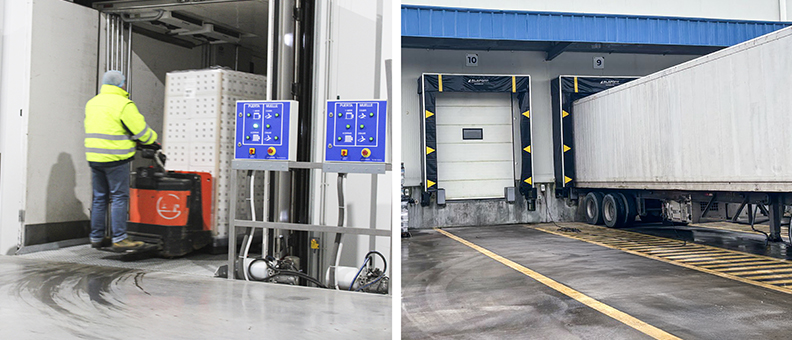
To achieve good performance, it is essential to consider factors such as space distribution, material flows and the overall energy efficiency of the facility. You can find further information in our guide on how to design an efficient warehouse.
At Alapont Global, we have been developing solutions for many years to optimise this critical area, helping facilities reduce energy losses and improve operational performance.
Optimising energy consumption
Savings on utilities are one of the most direct benefits. By meeting eco-management requirements, a logistics platform can significantly reduce electricity operating costs, particularly in temperature-controlled loading dock facilities.
Cold chain integrity
In sectors such as food and pharmaceuticals, maintaining temperature stability is essential to protect goods and ensure product quality. HQE positively assesses solutions that help reduce thermal losses at access points, a key consideration for facilities that also need to comply with standards such as IFS Logistics certification.
To prevent temperature deviations during loading and unloading operations, it is important to understand the main factors that can cause cold chain breaks at loading docks and how to prevent them.
Well-being and productivity
A working environment with good thermal and acoustic comfort contributes to better conditions for operators. This can support staff retention, reduce absenteeism and improve loading dock productivity.
Real estate asset value
A certified building can reduce the risk of obsolescence and increase its market value. Investors increasingly prioritise assets that are prepared to meet demanding environmental requirements.
What is the difference between HQE, LEED and BREEAM?
Although all three are sustainable building certification systems, they differ in their origins and methodological approaches.
| Feature | HQE | LEED | BREEAM |
|---|---|---|---|
| Origin | France | United States | United Kingdom |
| Main focus | Overall environmental quality and human well-being | Sustainability and energy efficiency | Environmental impact and resource management |
| Market presence | Widely established in France and French-speaking countries | Global international benchmark | Widely used throughout Europe |
The choice between these systems often depends on the location of the project, investor requirements and the technical team’s familiarity with the assessment scheme.
Which aspects of the loading dock can affect HQE performance?
The design and equipment of the loading dock can contribute positively to compliance with certain HQE criteria related to energy efficiency and hygrothermal comfort.
Air infiltration and thermal losses
Frequent door openings during operations can allow outdoor air to enter the facility and disrupt indoor temperature control. These air infiltrations can increase the workload of refrigeration or HVAC systems, increasing energy consumption and affecting eco-management performance.
Hygiene and air quality
Maintaining a clean environment is essential for the Health pillar, particularly in the food industry, where maintaining high standards of cleanliness and hygiene is critical.
Operator comfort
Maintaining a stable temperature in the loading area improves operator comfort and supports better working conditions. In this respect, HQE considers measures that help reduce indoor temperature fluctuations.
Solutions that can help improve these criteria
Although HQE certification assesses the building as a whole, certain loading dock solutions can contribute to improving criteria related to energy efficiency, comfort and maintenance.
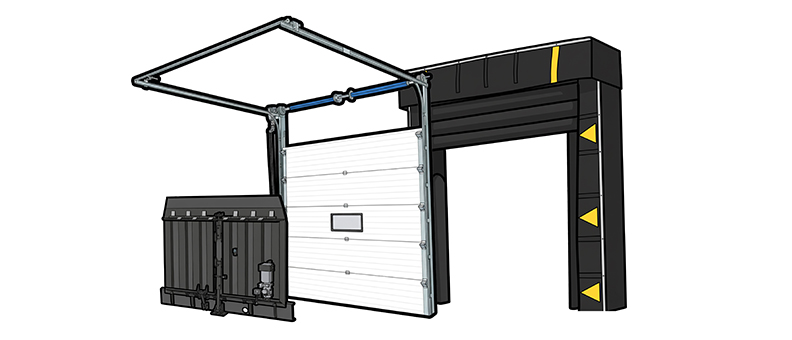
At Alapont Global, we design equipment specifically intended to optimise these aspects in logistics platforms.
Vertical storing dock leveler
The vertical storing dock leveler is particularly suitable for reducing thermal losses in certain types of facilities. Because it is stored in a vertical position, the sectional door can close in front of the leveler all the way down to the warehouse floor.
- Contribution to HQE performance: Helps reduce thermal bridges and air infiltration while also making the pit easier to clean.
Inflatable dock shelter
The inflatable dock shelter provides a high level of sealing by inflating around the body of the truck using air pressure.
- Contribution to HQE performance: Minimises the loss of conditioned air during loading and unloading, supporting energy efficiency targets and reducing utility consumption.
Industrial sectional overhead door
The industrial sectional overhead door provides a robust closure system with high thermal and acoustic insulation performance.
- Contribution to HQE performance: Supports the thermal and acoustic comfort of the facility while helping prevent energy losses when the loading dock is not in operation.
It is possible to prevent energy losses at the loading dock by integrating these elements in combination.
Benefits of HQE certification for a logistics platform
Investing in HQE standards can generate tangible medium- and long-term returns that positively affect the company’s financial performance.
Real operational savings
Effective dock sealing can provide significant energy savings during loading operations. Lower air leakage means lower electricity consumption and a reduction in the building’s total cost of ownership (TCO).
Grants and support programmes
Modernising facilities according to sustainability criteria may facilitate access to support programmes and incentives aimed at improving energy efficiency and industrial competitiveness.
Greater competitiveness in tenders
HQE certification can be a differentiating factor in international tenders and contracts with large corporations that require suppliers and partners to operate from sustainable facilities.
Frequently asked questions
Who awards HQE certification?
Internationally, HQE certification is managed by Cerway. In France, different schemes and organisations operate within the HQE ecosystem, including Certivéa for non-residential buildings and NF Habitat HQE for residential buildings.
How much does HQE certification cost?
There is no single fixed price. The cost depends on the type and size of the building, the project phase, the scope of certification and the number of audits required.
How long does HQE certification last?
For buildings in operation, certification is generally renewed periodically through follow-up audits to confirm that the required performance levels continue to be maintained.
Who can apply for HQE certification?
Developers, building owners, asset managers, construction companies and project managers can apply to certify the environmental performance of a building under the relevant HQE certification scheme.
Is HQE certification mandatory?
No. HQE is a voluntary standard, but it is highly valued by investors and companies seeking operational excellence and proactive compliance with increasingly demanding environmental requirements.
What are the benefits for a logistics building?
HQE certification can contribute to better cold chain control, lower energy consumption and increased asset value in the industrial real estate market.
Is HQE certification compatible with LEED or BREEAM?
Yes. The same building can obtain several environmental certifications provided that it meets the requirements of each system. The choice will depend on the country, the developer’s requirements and the objectives of the project.
Can an existing building be certified?
Yes. HQE provides certification schemes for new construction, renovation and buildings in operation, meaning that existing assets can be certified provided they meet the applicable criteria.
La certificación HQE como inversión en eficiencia y valor
HQE certification is much more than an environmental label. It is a tool for improving energy efficiency, reducing operating costs and increasing the value of a logistics platform.
If you are developing a new logistics platform or looking to improve the energy efficiency of your loading docks, Alapont Global can help you identify the most suitable solutions for your project.
