
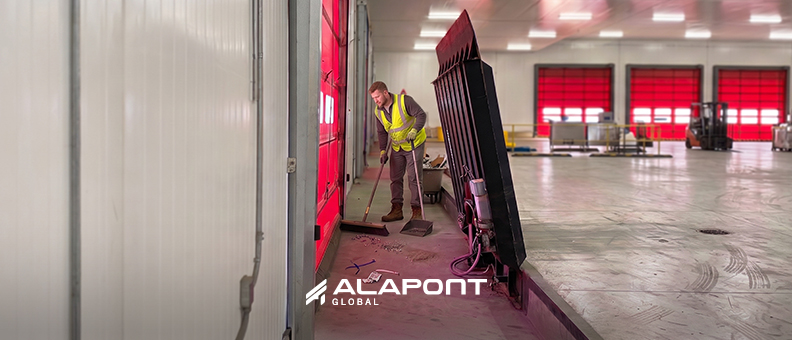
The pit of a dock leveller collects dust, packaging debris, residue from goods and liquids that drip during loading and unloading. Cleaning it regularly helps keep the installation clear, makes inspections easier and allows faults to be spotted before they get in the way of maintenance.
Cleaning shouldn’t be treated as a purely cosmetic task. It’s part of the preventive maintenance of the pit and helps you keep control of an area that, although it sits outside the usual working surface, is constantly exposed to dirt and debris.
Why does the pit collect so much debris?
The pit sits directly beneath the platform, so a good part of the debris generated during loading operations ends up inside it.
They can accumulate:
- Goods debris.
- Cardboard, plastic and other packaging materials.
- Dust and dirt.
- Organic matter.
- Water, oil or other liquids.
The trouble is that this debris can sit in the pit unnoticed during day-to-day operation. The longer it stays there, the harder it becomes to keep access areas clear and to properly inspect the components inside.
In facilities with a high frequency of loading and unloading, or where a lot of waste is generated, this build-up can become particularly significant.
On top of that, a constant presence of organic matter, damp or dirt can lead to bad odours and attract insects or rodents. Keeping the pit clean, then, also helps maintain suitable conditions in the working environment.
What problems can dirt in the pit cause?
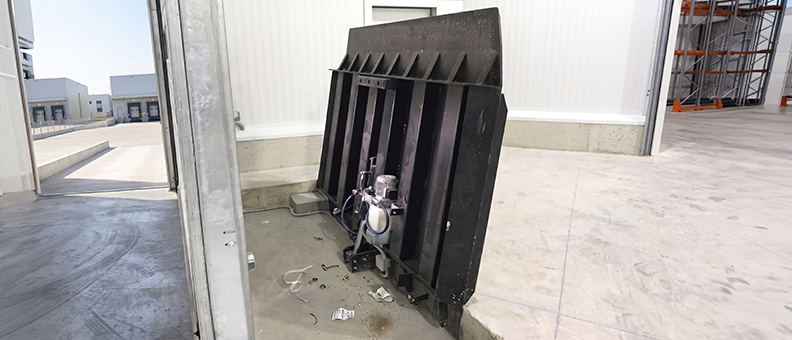
A pit full of debris doesn’t automatically mean a breakdown, but it can get in the way of the leveller’s operation, inspection and maintenance. The main issues worth preventing are:
| Problem | Potential impact |
|---|---|
| Debris build-up | Can accumulate around moving parts and interfere with their operation |
| Dirt on hinges | Can restrict movement and make it harder to assess their condition |
| Liquids and moisture | Can contribute to component deterioration and premature wear |
| Blocked pit | Can restrict access and make visual inspections more difficult |
| Persistent dirt | Can conceal faults that may otherwise be identified during an inspection |
| Organic residue | Can cause unpleasant odours and attract pests |
So cleaning the pit isn’t just about removing debris: it also leaves visible the areas that need to be checked during maintenance.
How does cleaning help prevent maintenance problems?
A clear pit makes it easier to check the condition of the accessible components of the installation.
During cleaning, you can identify signs of:
- Corrosion.
- Wear.
- Deformation.
- Damage to hinges.
- Presence of liquids.
- Unusual accumulations of debris.
This is particularly important because dirt can conceal certain abnormalities. Removing it makes visual inspection easier and allows you to identify problems that may require intervention at an earlier stage.
Therefore, pit cleaning and inspection are directly related: one facilitates the other.
If you need to learn more about preventing damage to the platform, you can consult this guide on how to prevent deformation in a dock leveller.
How often should the pit be cleaned?
There is no single frequency that can be applied to all installations.
The cleaning frequency depends on the conditions of use and the amount of debris that reaches the pit. To establish the appropriate frequency, you should consider:
- Loading and unloading frequency: more operations can lead to greater accumulation.
- Type of goods: some activities generate more debris than others.
- Amount of debris: this determines when the pit needs to be cleared again.
- Installation conditions: moisture and dirt can contribute to accumulation.
- Maintenance plan: cleaning should form part of regular inspection and maintenance tasks.
The reference point should therefore not be a fixed figure, but the actual condition of the pit and the operating conditions of the installation.
When dirt starts to accumulate, waiting until the problem becomes obvious offers no advantage. Cleaning should be integrated into the installation’s regular maintenance activities.
How should the pit of a dock leveller be cleaned?
Cleaning should be carried out with the equipment out of service and with the appropriate safety measures in place. The general procedure can be broken down into seven steps.
Stop and lock out the equipment
Before entering the pit, stop the dock leveller and apply the lockout and safety measures specified for that installation. Never enter the pit while there’s any risk of the platform moving.
Remove the accumulated debris
Clear away leftover goods, packaging, dust, organic matter and any other debris in the pit. The priority is to clear the areas where moving parts or components requiring inspection are located.
Clean the accessible areas
Once the larger debris has been removed, clean the accessible surfaces following the procedure set out for the installation. Don’t carry out actions that could introduce water, chemicals or dirt into components that aren’t designed for them.
Remove liquids and spills
If you find water, oil or other liquids, remove them following the correct procedure.
The presence of liquids can also be a sign of an underlying issue that needs checking, especially if this kind of build-up isn’t usual.
Carry out a visual check of the pit
With the area cleared, inspect the elements that are now accessible.
Pay attention to any signs of:
- Corrosion.
- Wear.
- Deformation.
- Damage.
- Liquids.
- Unusual accumulations.
Cleaning is a good opportunity to identify these signs because dirt is no longer obstructing the inspection.
Remove and dispose of the debris
The debris removed from the pit should be taken away and disposed of according to the procedures in place at the facility.
Put the equipment back into service
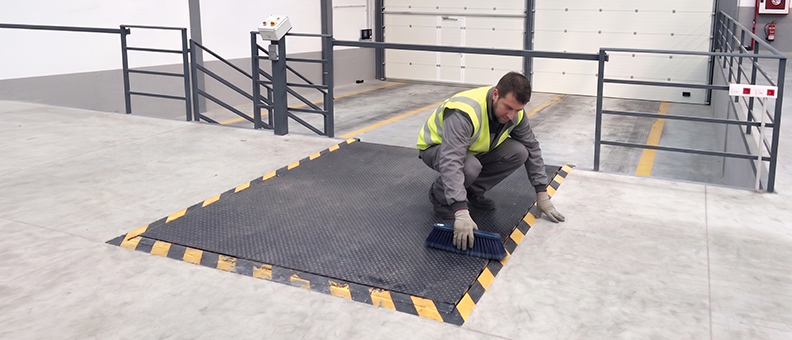
Once cleaning is complete and you’ve confirmed nothing remains that could interfere with operation, put the dock leveller back into service following the relevant instructions.
Does cleaning the pit mean disinfecting it?
No. Cleaning and disinfection are not the same thing. Cleaning involves removing dirt, waste, product residues and accumulated liquids.
Disinfection of the loading dock pit is an additional process that depends on the type of activity and the hygiene protocols applicable to the facility.
Therefore, routine pit cleaning should not automatically be considered disinfection. First, waste and residues are removed and the area is cleared; specific hygiene measures can then be applied when required.
What happens if the pit is cleaned but not inspected?
Cleaning the pit and walking away without checking its condition wastes a good part of the value of this maintenance task.
Once the debris is out, you have much better visibility of the components and can spot situations that were previously hidden from view.
remove debris → clean → visually inspect → identify anomalies → take action when necessary
Cleaning doesn’t replace maintenance inspections, but it does make them far easier to carry out on a clear, accessible pit.
How does a vertical dock leveller make pit cleaning easier?
The design of the pit also has an effect on how easy these tasks are to carry out.
In hydraulic vertical dock levellers, the pit configuration is smaller and more open, which makes access, visibility and cleaning and inspection tasks noticeably easier.
This becomes particularly relevant when pit cleaning is part of the routine maintenance of the facility and you need to access this area on a regular basis. It isn’t just about cleaning more thoroughly, it’s about having a configuration that makes the cleaning task itself simpler from the outset.
What should you check after cleaning the pit?
Once the work is complete, the goal is for the pit to be clear and for any detected anomalies to have been identified.
Before using the installation again, check that:
- No debris remains in moving areas.
- No liquids or spills remain.
- Accessible areas can be properly inspected.
- No previously unreported damage or deformation has been identified.
- There are no elements that could interfere with operation.
This means that cleaning does not end when the dirt has been removed. It ends when the pit is clear and the installation can resume operation under suitable conditions.
Frequently asked questions about pit cleaning
Why does dirt build up in the pit of a dock leveller?
Because it sits beneath the platform and receives part of the debris generated during loading and unloading. Dust, packaging, leftover goods, organic matter and liquids can all end up collecting inside it. As it isn’t an area of regular foot traffic, this dirt can remain there unless cleaning is included as part of the maintenance routine.
Can dirt affect the hinges?
It can hinder their movement and make it harder to check their condition. Build-up can also hide signs of wear or damage. Keeping the pit clear makes visual inspection of the hinges much easier and allows any fault requiring attention to be caught sooner.
Does cleaning the pit prevent breakdowns?
Cleaning doesn’t guarantee that breakdowns won’t happen, but it does make maintenance and fault detection considerably easier. Removing debris allows the accessible components to be properly checked and stops certain parts being left surrounded by dirt or liquids for long periods.
When should you clean the pit of a dock leveller?
There’s no single frequency that fits every case. You need to adapt it to how the facility is used, the type of goods handled, the amount of debris generated and the tasks already planned as part of your maintenance schedule. A visible build-up of debris is also, in itself, a sign that it’s time to act and clear the pit again.
Do you need to disinfect the pit after cleaning it?
Not always. Cleaning removes debris and dirt, while disinfection is a separate step. Whether it’s needed depends on the activity carried out and the applicable hygiene protocols. Don’t treat the two as equivalent, and don’t assume disinfection is required after every clean.
What should you check during pit cleaning?
With the pit clear, look for signs of corrosion, wear, deformation, damaged hinges, standing liquid or unusual build-ups of debris. The aim is to use the cleaning process to make visual inspection easier and to catch anything that needs to be reported and looked at further.
Does a vertical dock leveller make pit cleaning easier?
The smaller, more open pit configuration used in hydraulic vertical dock levellers makes access, visibility, and cleaning and inspection tasks easier. This is particularly useful when pit cleaning needs to be carried out regularly as part of the facility’s maintenance.
A clean pit makes maintenance easier
Cleaning the pit isn’t a secondary task. The debris that builds up during loading and unloading can get in the way of inspection, affect components of the dock leveller and lead to bad odours or pest problems.
That’s why keeping the pit clear should form part of preventive maintenance. How often it’s needed depends on how the facility is used, the type of goods handled and the amount of debris generated.
Each clean is also a chance to visually check the condition of the accessible areas and spot possible signs of wear, corrosion, deformation, damage or standing liquid.
What’s the key takeaway?
- A clean pit is easier to inspect
- An easier inspection makes it easier to spot faults
- Removing debris stops it from building up around the components
- And easy access makes it far more realistic to keep this task as part of your routine maintenance
Cleaning starts with removing debris, but its purpose goes beyond that: keeping the pit accessible, visible and in suitable condition to make maintaining the dock leveller easier.
If ease of cleaning and inspection is an important criterion for your facility, it’s also worth factoring in when you’re choosing the pit configuration at the design stage.
