
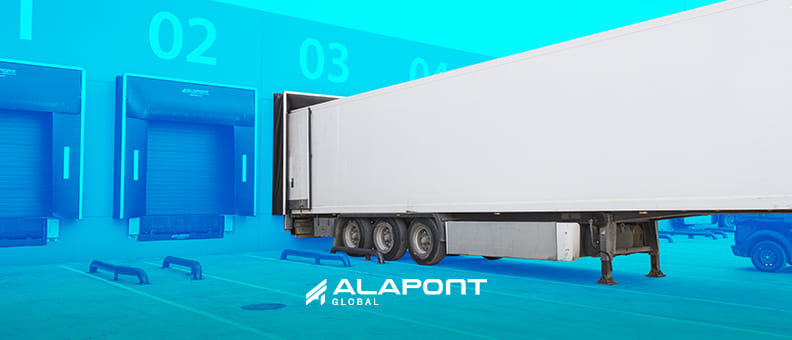
Problems at loading docks are one of the main sources of inefficiency within the supply chain, leading to issues ranging from thermal losses and ice formation to serious economic and health consequences.
Ignoring equipment wear or poor coordination not only slows down operations, but also compromises worker safety and the integrity of the goods being handled.
How to prevent impact damage to industrial doors from trucks
Continuous contact between trucks and the side frames or lower sections of doors at loading and unloading points is a recurring issue that compromises thermal insulation.
In facilities with high traffic flow, accidental impacts from vehicles or forklifts often lead to mechanical failures and aesthetic damage that weaken the structural integrity of the door system.
To mitigate this damage, it is essential to implement a professional industrial door maintenance program that evaluates:
- Panel alignment
- The condition of the guide tracks
Additionally, installing protective systems such as bollards or physical barriers prevents pallet trucks and forklifts from directly impacting the door, significantly extending the lifespan of the loading area.
How to prevent structural deterioration and weld failure in dock levelers
In the loading area, the platform is subjected to extreme mechanical stress, and structural problems often go unnoticed until an accident occurs.
Weld deterioration in dock levelers, stairs, and ledges accelerates when:
- Loads are dragged across the surface instead of lifted
- Inappropriate equipment is used
If the primary welds of a hydraulic dock leveler fail, the leveler may detach from the platform, causing operator injuries and equipment damage.
Regular inspections are critical to preventing structural alterations in the loading platform that could lead to unexpected production downtime.
A semi-annual weld inspection allows early detection of material fatigue before the integrity of the loading point is compromised.
Risks caused by poor communication at the loading dock
Lack of effective communication is the main cause of premature truck departure, the most serious accident scenario at a loading dock.
Equipment such as dock shelters, although improving insulation, can act as a physical and visual barrier that prevents direct communication between the truck driver and the dock operator.
If the truck moves away prematurely while a forklift is inside the trailer, the consequences may include:
- Fatal injuries
- Equipment damage
Relying solely on verbal or hand signals does not eliminate the risk of human error. Automation through vehicle restraint systems, secures the process using synchronized traffic lights that visually indicate when it is safe to operate.
What are the most common problems in hydraulic systems?
The most frequent issues in loading dock hydraulic systems are fluid leaks and hydraulic pump failures, which prevent the platform from reaching the pressure required to lift and operate safely.
These leaks are typically caused by:
- Damaged hoses
- Worn seals
- Poor maintenance practices
In addition, leaks can create highly dangerous slippery surfaces, increasing the risk of accidents and unexpected downtime.
To ensure operational continuity and optimize safety, it is essential to understand the operation of hydraulic power units. This allows proper monitoring of fluid levels and the condition of electrical components, preventing unexpected interruptions.
Having spare parts for loading docks and hydraulic repair kits readily available ensures a rapid response to incidents. Even in cases of hydraulic pump failure due to overheating or wear, downtime can be minimized and the platform kept operating safely.
How to solve measurement and alignment problems at the dock
A common problem during facility upgrades is the lack of technical data from the original manufacturer or accurate measurements of the pit opening.
A dock leveler that does not fit perfectly or is misaligned with the truck makes forklift traffic difficult and increases the risk of product falls. Misalignment can occur due to:
- Ground movement over time
- Incorrect initial installation
To solve this without expensive civil works, engineering solutions and custom-manufactured equipment can be designed to adapt to the existing pit dimensions.
Identifying when it is advisable to replace dock levelers allows facilities to modernize their installation, improving productivity and operational safety without interrupting production.
Why do lip hinges break and how to choose the right dock bumpers?
The hinges of the hinged lip are critical points that typically fail without prior warning. If they are not reinforced, they tend to break due to material fatigue, completely stopping operations.
In addition, selecting the wrong type of dock bumper may prevent proper absorption of truck impact, damaging both the vehicle and the dock structure.
To prevent these problems, the installation of movable steel dock bumpers is recommended. These:
- Move vertically with the truck, reducing friction and wear
- Provide greater durability compared to fixed rubber bumpers
- Protect the dock platform structure and extend its lifespan
You can explore our range of steel and polyurethane dock bumpers, specifically designed to absorb impacts and improve safety in loading areas.
Other key recommendations to maintain bumpers and hinges in optimal condition:
- Invest in high-quality bumpers to reduce maintenance costs
- Inspect hinges regularly to detect fatigue before failure
- Keep impact zones clean and free of debris that increases friction
What impact do dirt and lack of maintenance have on dock pits?
Poor maintenance is a contributing factor to failures in the locking mechanisms of dock plates.
The accumulation of dirt and debris in dock pits can prevent the coupling plate from remaining properly in position, which is extremely dangerous and increases the risk of forklift overturning.
For this reason, implementing dock pit cleaning safety protocols is an essential preventive measure to ensure proper operation of moving components.
| Problem detected | Operational consequence | Recommended solution |
|---|---|---|
| Hydraulic leaks | Slippery surfaces and inoperative dock leveler | Inspection of hoses, seals, and preventive maintenance |
| Premature truck departure | Forklift falls and serious injuries | Automatic restraint systems and traffic lights |
| Weld wear | Leveler detachment from platform | Semi-annual inspections and proper equipment use |
| Weak hinges | Complete operational stoppage due to lip breakage | Reinforced hinges and periodic inspections |
Frequently asked questions
What type of dock bumper is the most durable?
Steel dock bumpers are the most recommended option, as their vertical movement in sync with the truck drastically reduces friction and wear.
Why does my hydraulic dock leveler not rise even though the motor is running?
This is usually caused by pressure loss due to fluid leaks, damaged seals, or hydraulic pump failure.
Are wheel chocks mandatory if traffic lights are already installed?
Yes. Wheel chocks that physically prevent truck movement are required to guarantee safety during the entire loading operation.
How does temperature affect dock equipment?
Extreme temperatures affect the viscosity of hydraulic fluid and may compromise thermal insulation if doors or dock shelters show signs of wear.
Optimize your loading dock area with custom engineering solutions
Optimizing your loading dock is not just a mechanical matter, but a strategic engineering approach to safety and efficiency.
At Alapont Global, we help companies identify friction points before they become irreversible costs. As manufacturers, we design engineering solutions that eliminate these problems at their source.
Would you like us to perform a technical audit to identify potential risks in your loading dock area?
